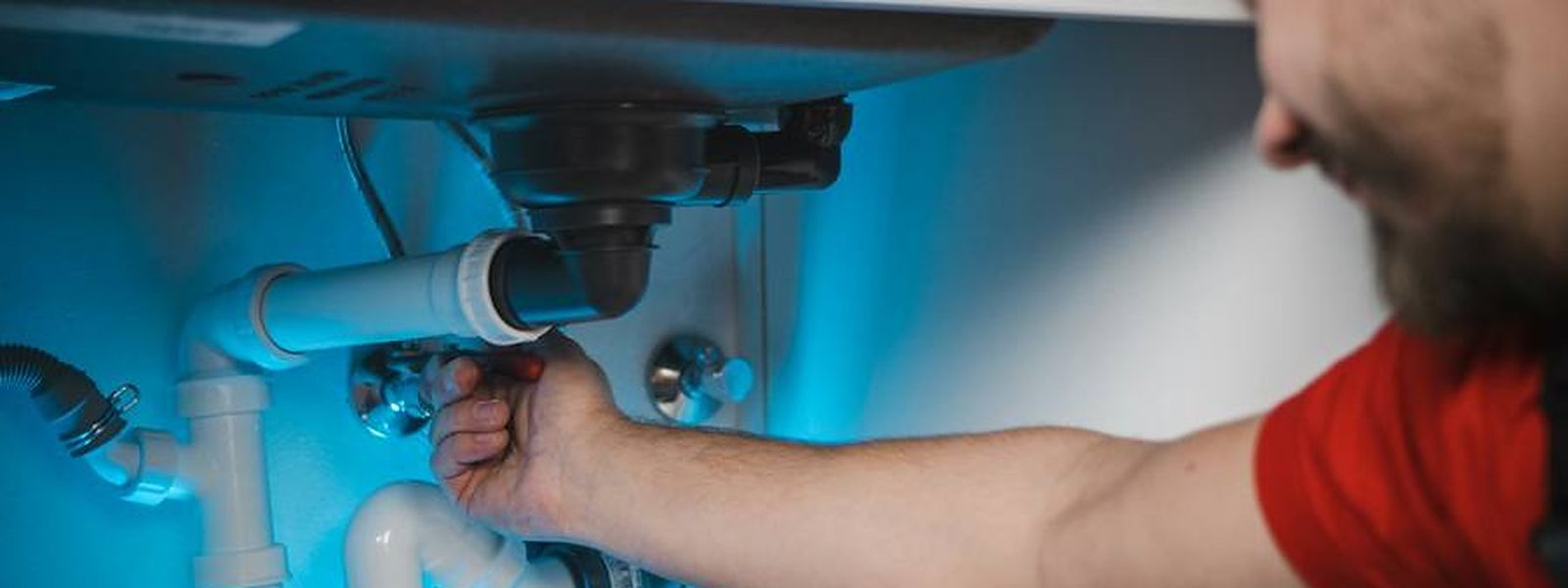
Losing water at home in Makkah? Find the leak properly
Leaks in Makkah have their usual hiding places: the ground tank and its float valve, bare pipes on the roof under summer sun, the roof itself in the…
Leaks in Makkah have their usual hiding places: the ground tank and its float valve, bare pipes on the roof under summer sun, the roof itself in the…
Half an hour tells you whether there really is a leak, and roughly which part of the house it's in.
Turn every tap off, cut the pump, and snap the meter reading. Come back an hour later with no water used: if the number has moved, something is leaking between the meter and the tank, or in the tank itself.
Shut the inlet valve at night and put a strip of tape at the waterline. If it has dropped by morning with nothing used, the tank or its pipes are leaking.
Drip food dye into the toilet tank and leave it unflushed. Colour in the bowl after fifteen minutes means the cistern is leaking day and night.
Damp under a window after rain is a different story from a steady patch low down on a bathroom wall. Photograph it every couple of days and see if it grows.
⚡ If the damp is close to a socket or a board, switch off that circuit and don't touch the wet wall.
The firm confirms with equipment, but these are the places that come up again and again.
A hairline crack in the concrete or a float valve that won't close, and the water soaks into the ground unseen. Some Makkah firms say rocky, salty ground wears concrete tanks, so ask about lining an old one.
Exposed pipes heat up by day and cool at night, and joints loosen over the years. It tends to surface as a mark on the ceiling of the highest floor.
Makkah gets little rain, but a heavy downpour finds any crack in the waterproofing. If the ceiling only drips after rain, the roof is the likely culprit, not the pipes.
Iron pipes inside thick walls rust, and the water travels through the stone and appears far from the source. Thermal and acoustic equipment saves a lot of breaking here.
In blocks of flats, the stain on your bathroom ceiling may come from the bathroom above. A firm can prove that before anything is broken in your flat.
A mixer or waste joint under the tiles seeps slowly, the wall swells, or tiles start to sound hollow.
Good firms use more than one method and compare the results.
Sees the temperature difference that water makes inside a wall or floor.
Picks up the hiss of a pipe losing water and checks whether the line holds pressure.
Reads the moisture level in a wall point by point.
Every month of delay is water lost. Some firms say a detection report helps if you dispute the bill; ask the National Water Company what it needs.
October and November are a good time to check the roof and its waterproofing, ahead of the December and January rains.
Especially an old house or a block. Checking the tanks and bathrooms before signing costs less than a surprise afterwards.
A crew living in Jeddah or Taif can't get into Makkah without a permit once the pre-Hajj restrictions begin; check the official announcement from the authorities before Hajj season. If time is short, choose a firm from inside the city.
Ask these by message first; the answers show who works with equipment and who guesses.
Just a thermal camera, or an acoustic device and a pressure test as well?
Some prices are for the inside of the flat only.
One Makkah firm says its inspection charge is knocked off the repair bill.
Useful with the water company, the landlord or a neighbour.
Accurate detection means a small opening in one spot.
Ask for that in a message, naming the waterproofing product.
See one of these, and get a second firm's view.
That's guessing, not detection.
A leak is usually at one or two points, and the report should name them.
Only the water company decides that.
Afterwards you've no idea what went into your wall.
Prices two Makkah firms advertise for 2026, plus averages and a real job from HomeRun. Repair and waterproofing are usually charged separately from detection.
| Service | Rough price |
|---|---|
| Flat inspection up to 180 m² (thermal, acoustic, pressure) | From SAR 150, deducted if they repair |
| First inspection, by area | SAR 150 – 300 |
| Wall damp mapped with a meter | SAR 200 – 400 |
| Ground and roof tank check | From SAR 180; another firm SAR 250 – 500 |
| Villa 250 – 550 m² | From SAR 300 (300 – 450) |
| Full villa inspection incl. waterproofing and drains | SAR 800 – 1,500 |
| Bathroom leak repair with waterproofing (one tile lifted) | From SAR 500 |
| Pipe leak repair | SAR 200 – 800 |
| Real job: damp in bathroom walls, Ash-Shawqiyah (Jun 2026) | SAR 1,000 |
💡 HomeRun's Makkah average for leak detection is SAR 150 – 2,000. The wide spread is because some requests are detection only and others include the repair.
📸 Before the visit, photograph the meter, the last two bills and the damp patches. It shortens the inspection.
Sources: two Makkah leak-detection firms' price pages (one dated March 2026, the other with 2026 prices) and Makkah averages plus a real job on HomeRun, opened 3 November 2026. Most are 'from' figures the firms set for themselves. The fee is settled privately with the firm; Laqeeni isn't part of that.
Makkah firms advertise a flat inspection from SAR 150, some SAR 150–300 by size. Tanks and villas cost more, and the repair is usually extra.
Probably no leak after the meter. It may be a reading or an estimate, so ask the National Water Company (NWC) before paying for detection.
Sometimes. But in thick stone walls and floors, an acoustic device and pressure test give a more precise result.
No. Laqeeni lists the firm; you ring it and settle up with it.
Last updated: November 2026
Print it, or save it on your phone for next time.
laqeeni.sa/en/leak-detection-makkah/
Leak detection firms from Makkah are joining Laqeeni now. A WhatsApp to us gets you a message when the list is complete; from then on it's just you and the firm, no middleman.
Get notified on WhatsAppAre you a tradesman? Join Laqeeni free